# Messaging

## Overview

The Client Gateway supports the transmission and reception of messages and large files. Alternatively, participants can exchange messages through the Message Box when the `Message Forms` option is enabled. In this case, users can leverage a dynamically generated form, automatically populated based on the structure defined in the uploaded JSON schema.

***

## User Guide

### Pre-requisites

* Authorization to Client Gateway
* Subcribe/publish channels
* Topics

### Simple Messaging

A message can be sent by uploading a JSON file that defines the desired channel and topic in Data Messaging File Upload and vice versa.

#### Send a Message

1. Navigate to `Data Messaging`  > `File Upload`. Choose channel name, topic and version before uploading a json file that matches the selected topic schema. Click `Save` to send the message

<figure><img src="/files/pXOEbHO8IfasqIkUEG94" alt=""><figcaption><p>Send message</p></figcaption></figure>

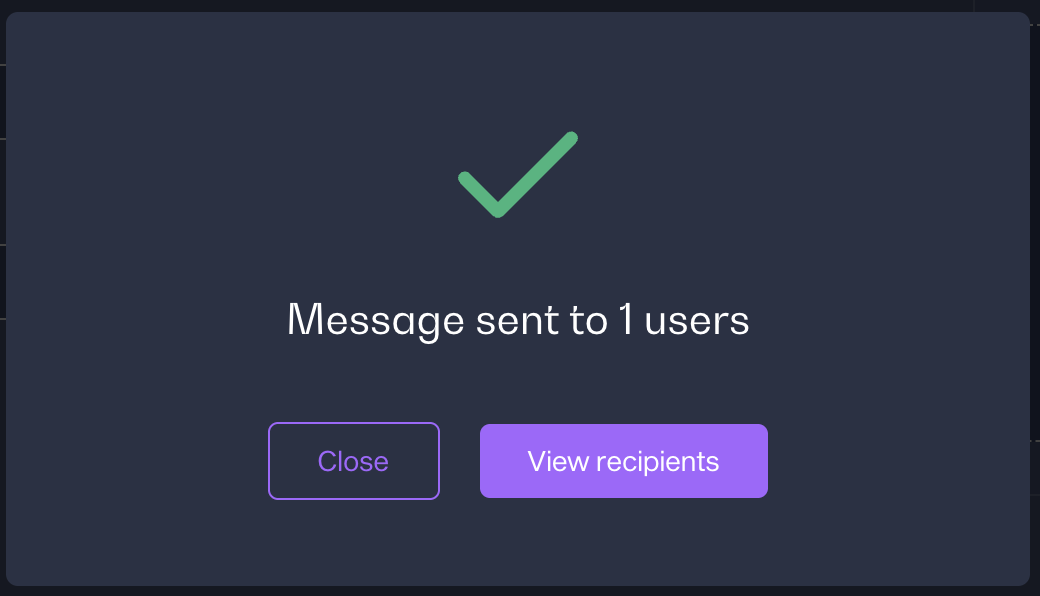
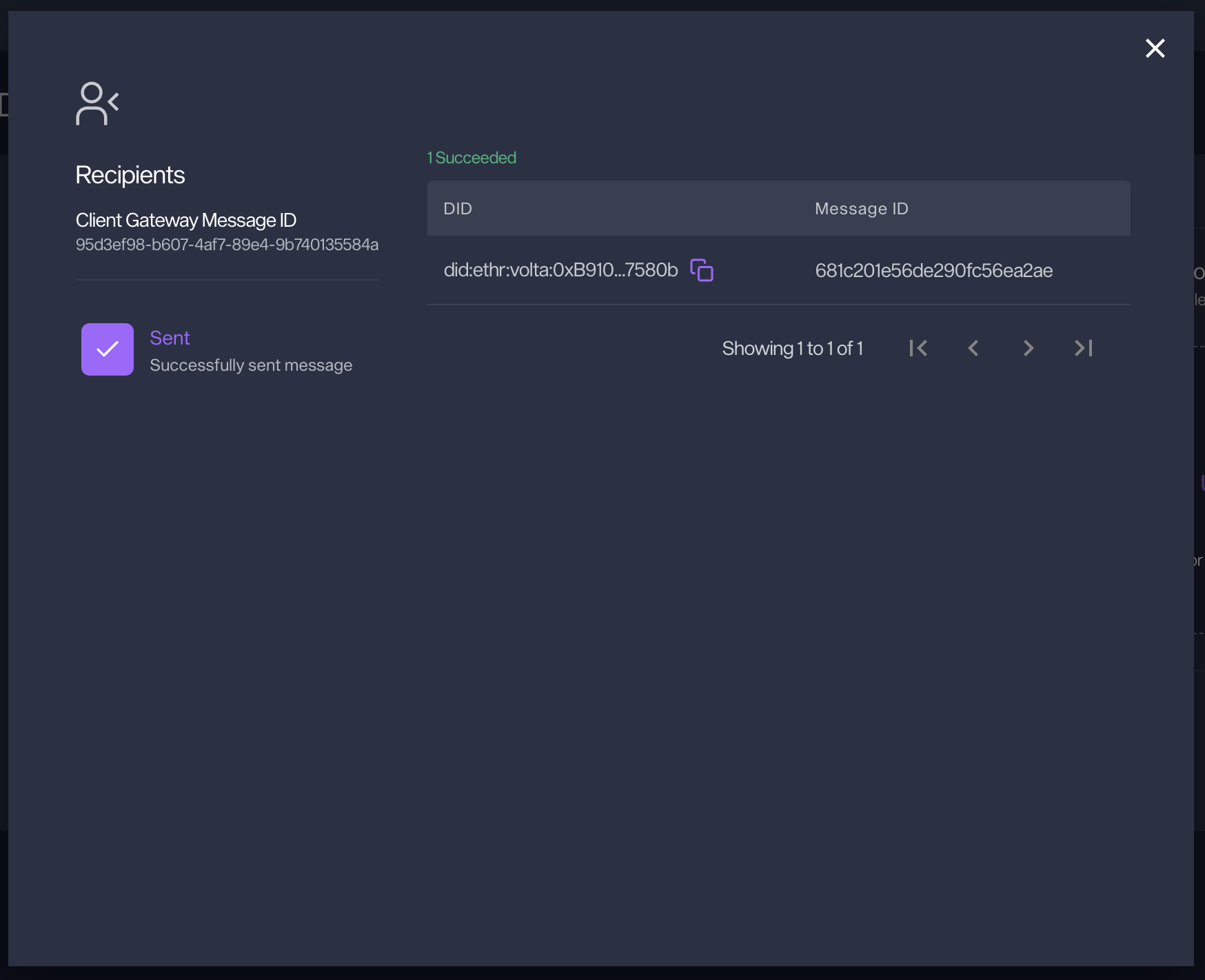
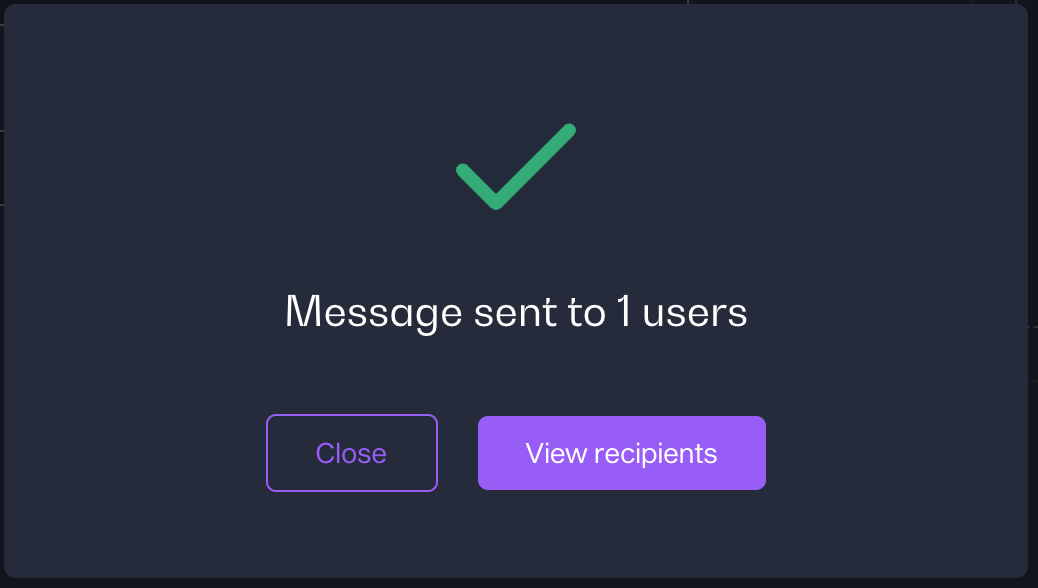
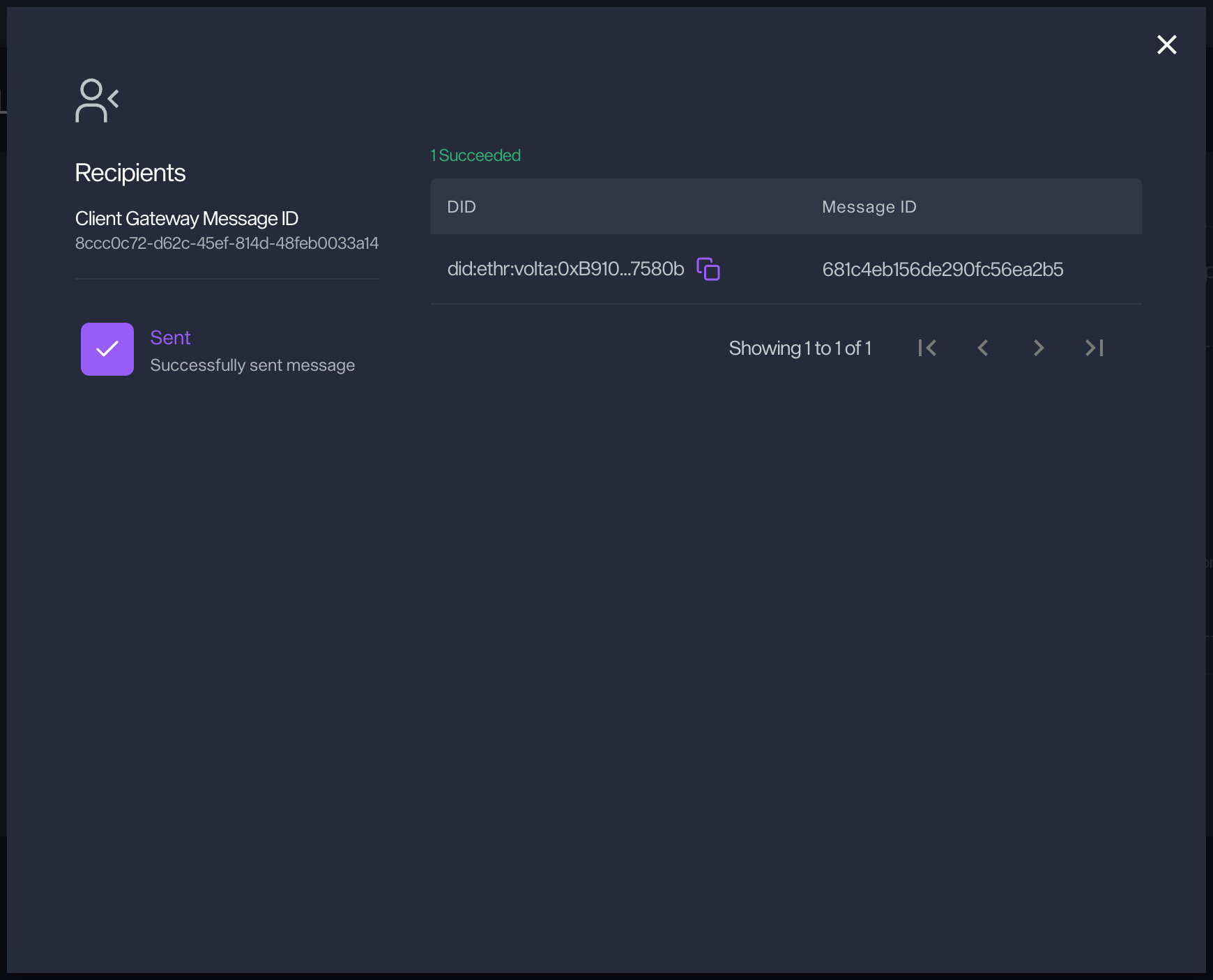
2. Success message will be shown, click `Close` to close modal or `View recipients` to see the recipient list and delivery status

<figure><img src="/files/hKWAsCJ2Dv21txlSSXlF" alt="" width="375"><figcaption><p>Successfully send message</p></figcaption></figure>

<figure><img src="/files/nT9nf7Iw6jk8B8SDkW4U" alt=""><figcaption><p>Recipient list</p></figcaption></figure>

#### Receive a Message

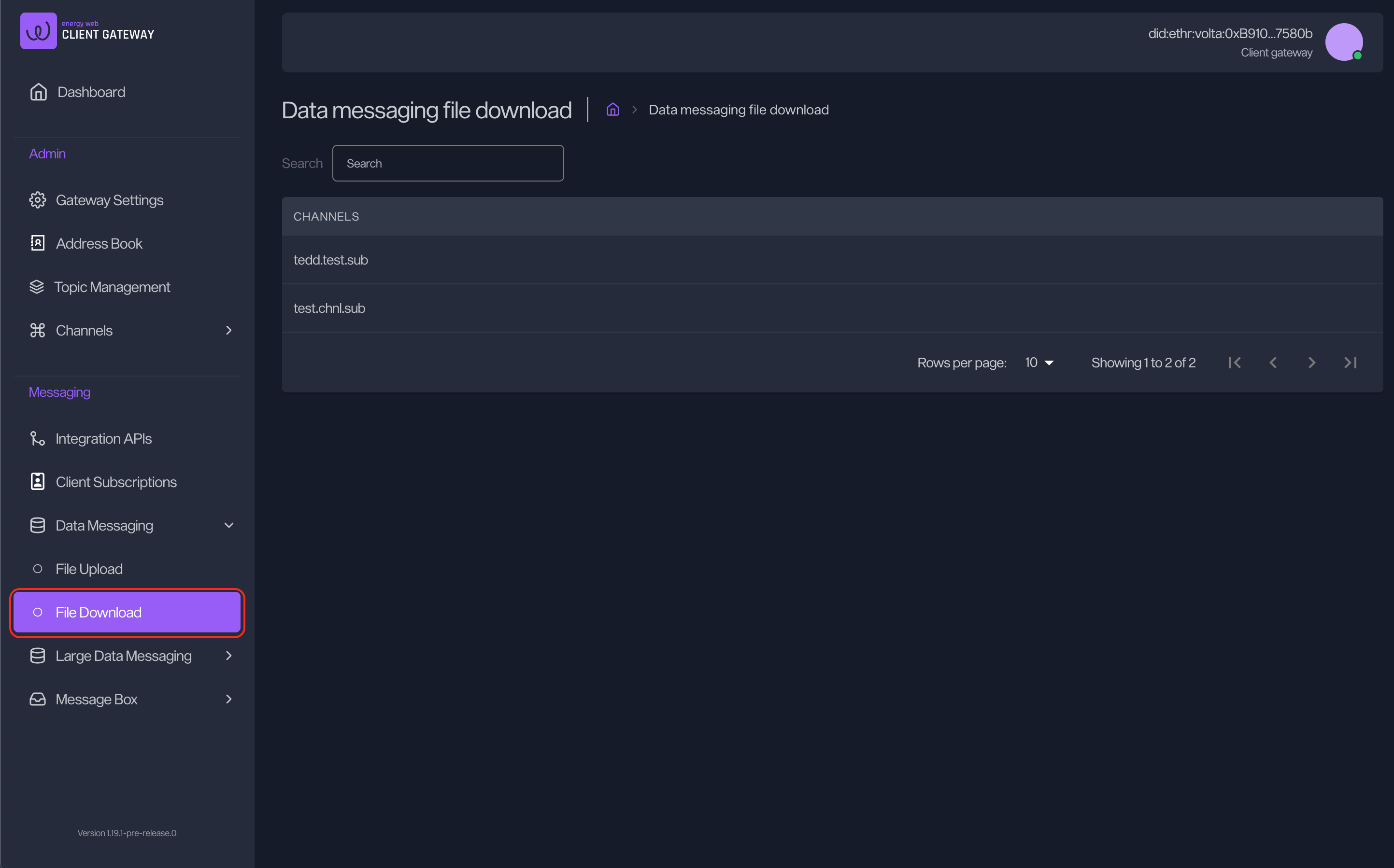
1. Navigate to `Data Messaging`  > `File Download` and choose a channel by clicking on it

<figure><img src="/files/b50cA7AssKLiPDA1We4F" alt=""><figcaption><p>File download subscribe channel list</p></figcaption></figure>

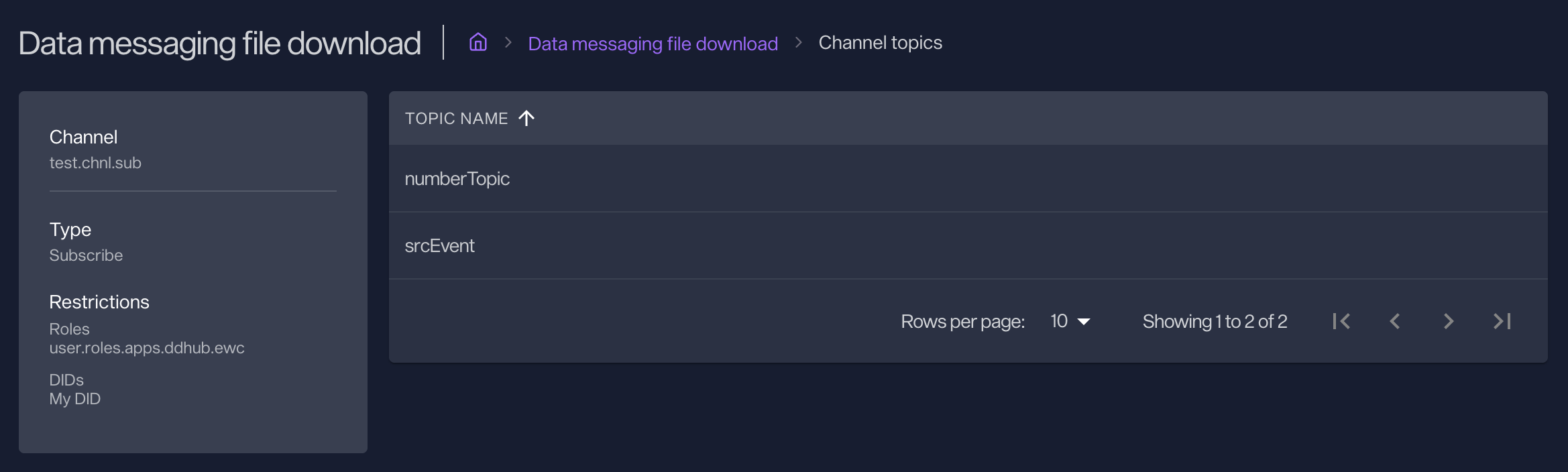
2. You will be redirected to topic list page, click on a topic to proceed

<figure><img src="/files/bTzkmhNbFsKiU2oB1XmL" alt=""><figcaption><p>File download topic list</p></figcaption></figure>

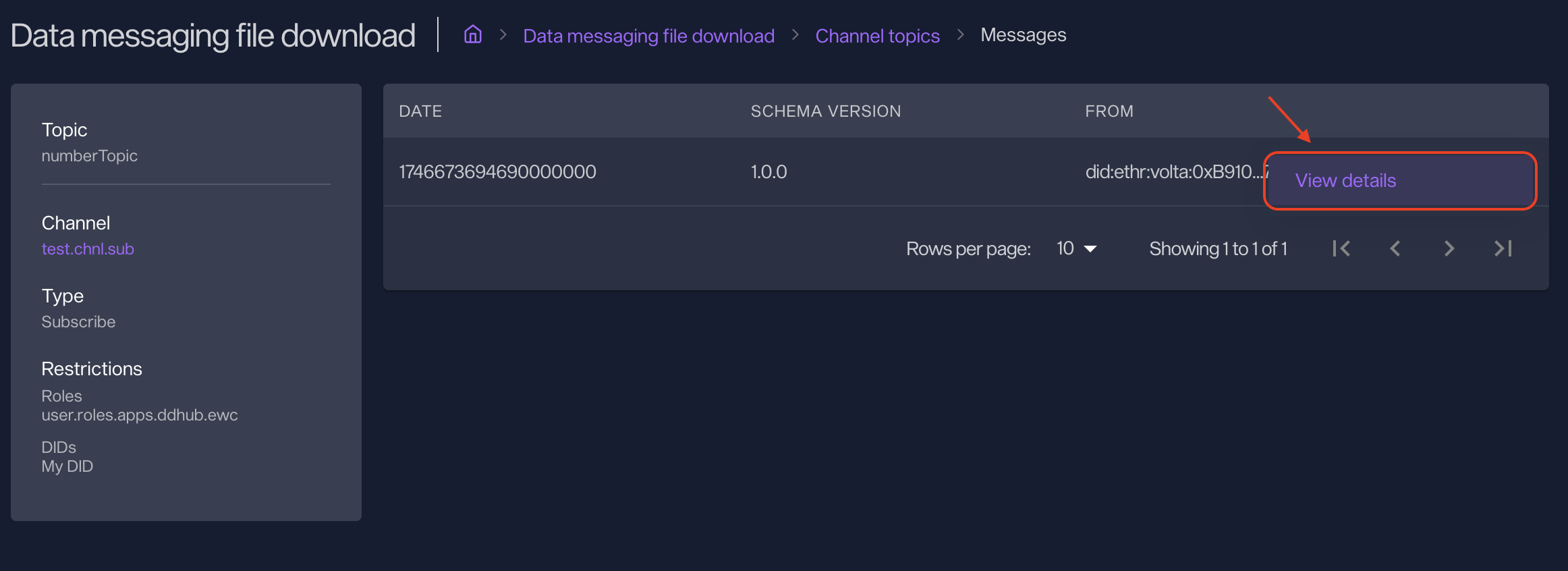
3. The message will be displayed, click on `View details` to see message content

<figure><img src="/files/czHxTcLNWR3c4vzvL26y" alt=""><figcaption><p>Received message</p></figcaption></figure>

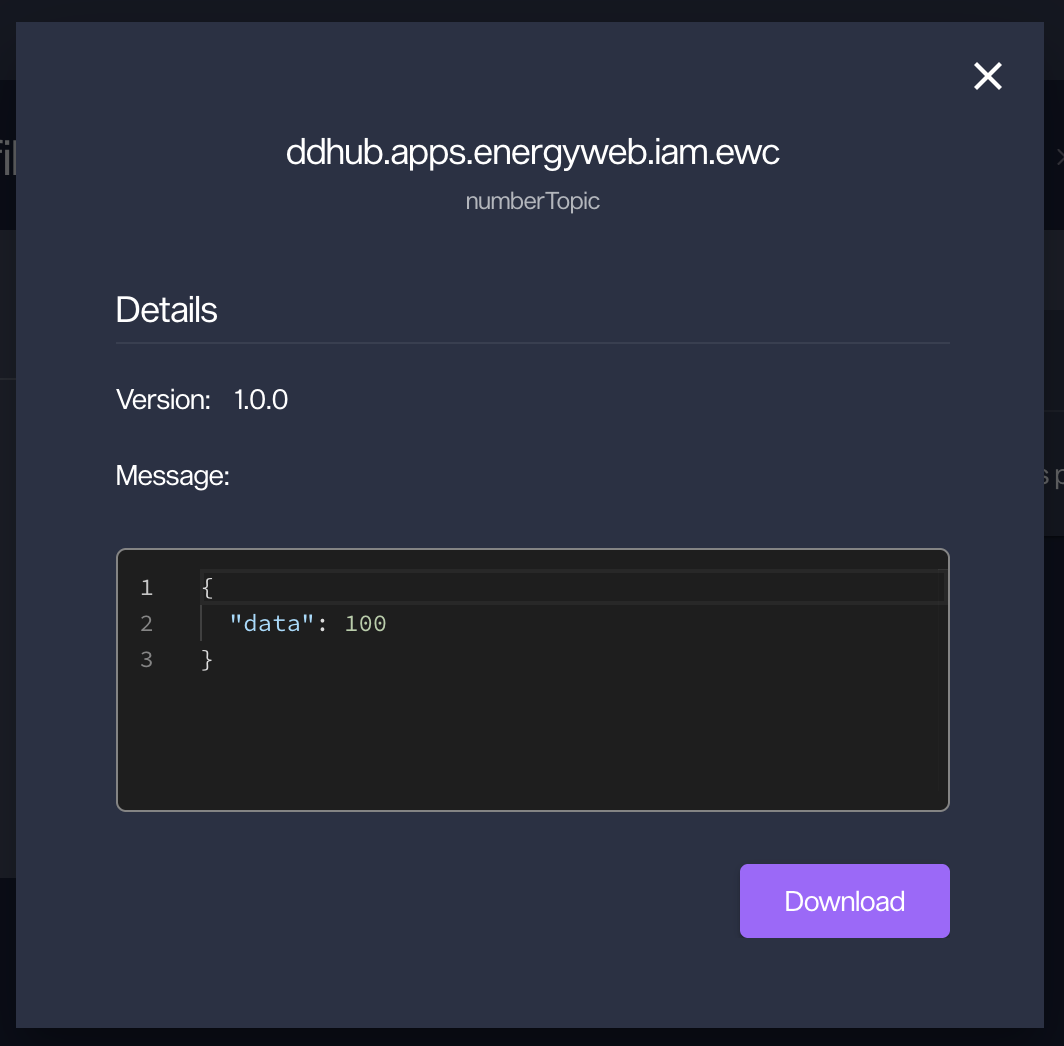
4. Click `Download` to save the message as JSON file&#x20;

<figure><img src="/files/iqUL3gfvOAbkwnX8Bv54" alt="" width="375"><figcaption><p>Message preview</p></figcaption></figure>

### Large Data Messaging

Schema types such as XML, TSV and CSV are classified as large data types and are being handled under Large Data Messaging within the Client Gateway.

#### Uploading a File

1. Navigate to `Large Data Messaging`  > `File Upload`. Choose channel name, topic and version before uploading a file that matches the selected topic schema. Click `Save` to send the message

<figure><img src="/files/kcDkol02jeeo0hrarzTW" alt=""><figcaption><p>Send large data file</p></figcaption></figure>

2. Success message will be shown, click `Close` to close modal or `View recipients` to see the recipient list and delivery status

<figure><img src="/files/UTrlxRq5jRj5uQRusQ0T" alt="" width="375"><figcaption><p>Successfully sent a message</p></figcaption></figure>

<figure><img src="/files/E7C0ZX55Vf9zjadB1Uq3" alt=""><figcaption><p>Recipient list</p></figcaption></figure>

#### Downloading a File

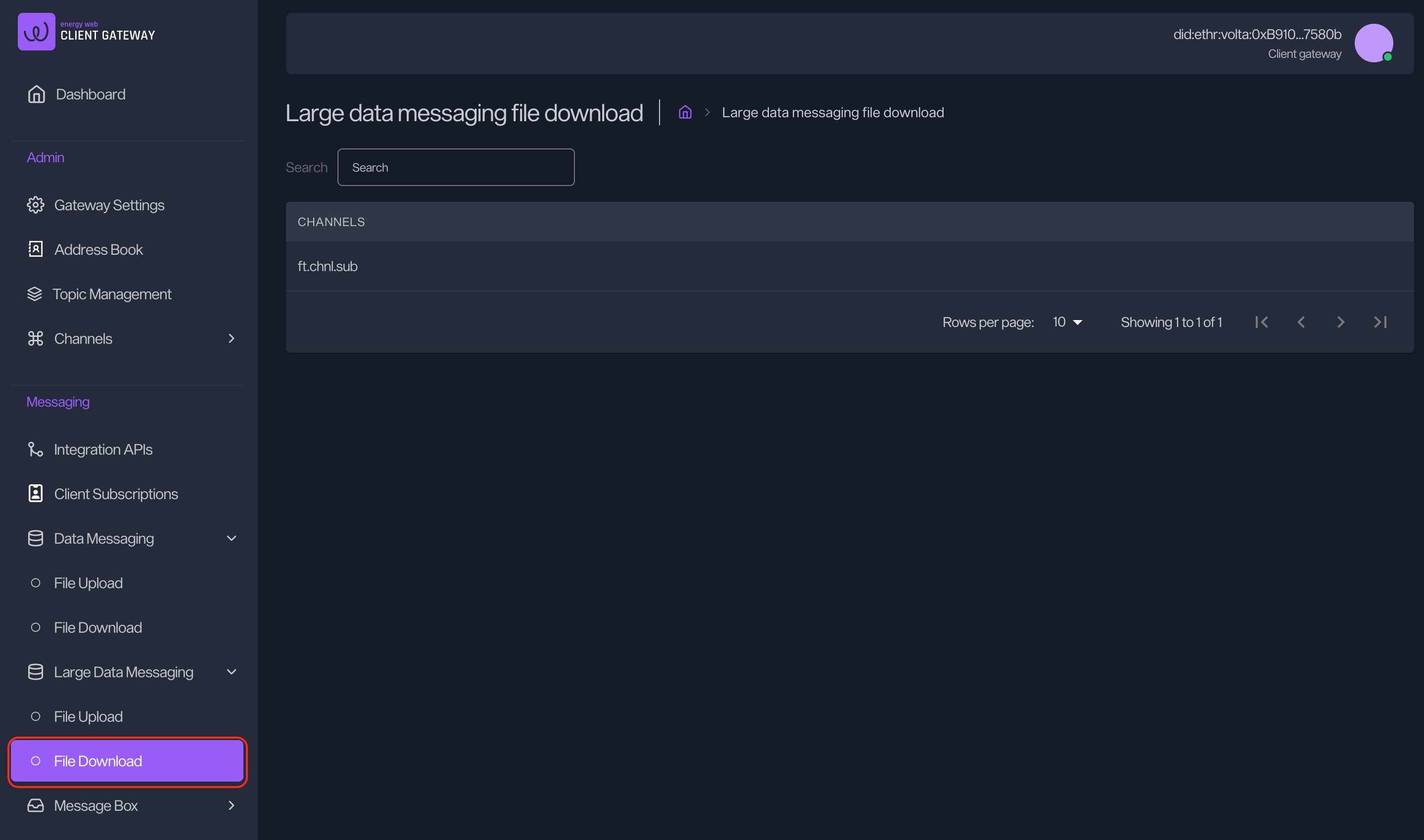
1. Navigate to `Large Data Messaging`  > `File Download` and choose a channel by clicking on it

<figure><img src="/files/yHTAvUQWr6fbbrplVXLa" alt=""><figcaption><p>Large Data Messaging subscribe channels</p></figcaption></figure>

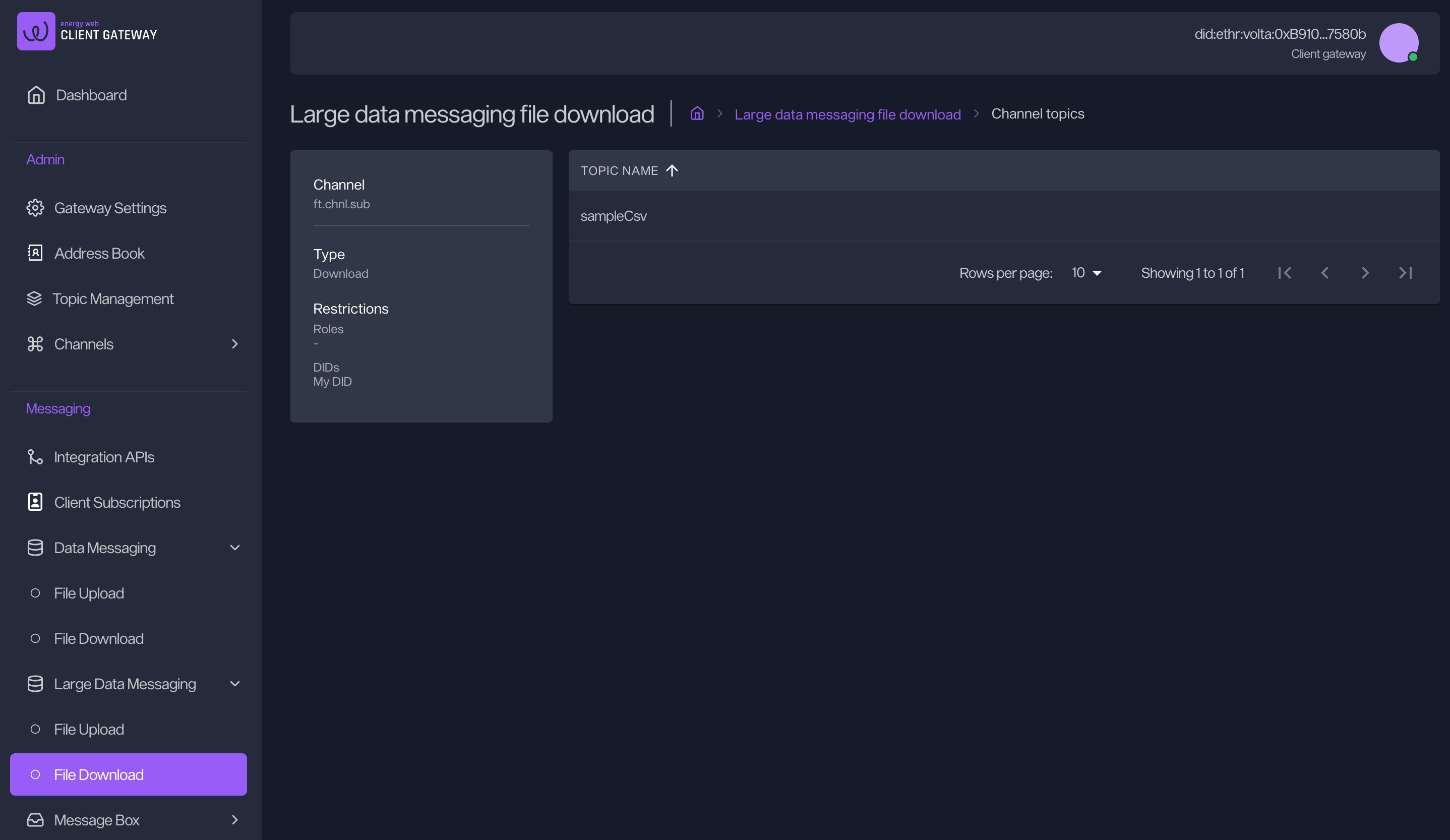
2. You will be redirected to topic list page, click on a topic to proceed

<figure><img src="/files/jw0IOepdROJIr0pStQ2I" alt=""><figcaption><p>Large Data Messaging topics</p></figcaption></figure>

3. The message will be displayed, click on download button to download the received file

<figure><img src="/files/KTifKiVXtfBmYAShPpfA" alt=""><figcaption><p>Received large data message</p></figcaption></figure>

### Messaging UI

An alternative method for sending and receiving messages is through the Messaging UI. Instead of uploading a JSON file containing the message content, users can use the dynamic form to complete required and optional fields as defined by the selected topic's schema.

#### Sending a message

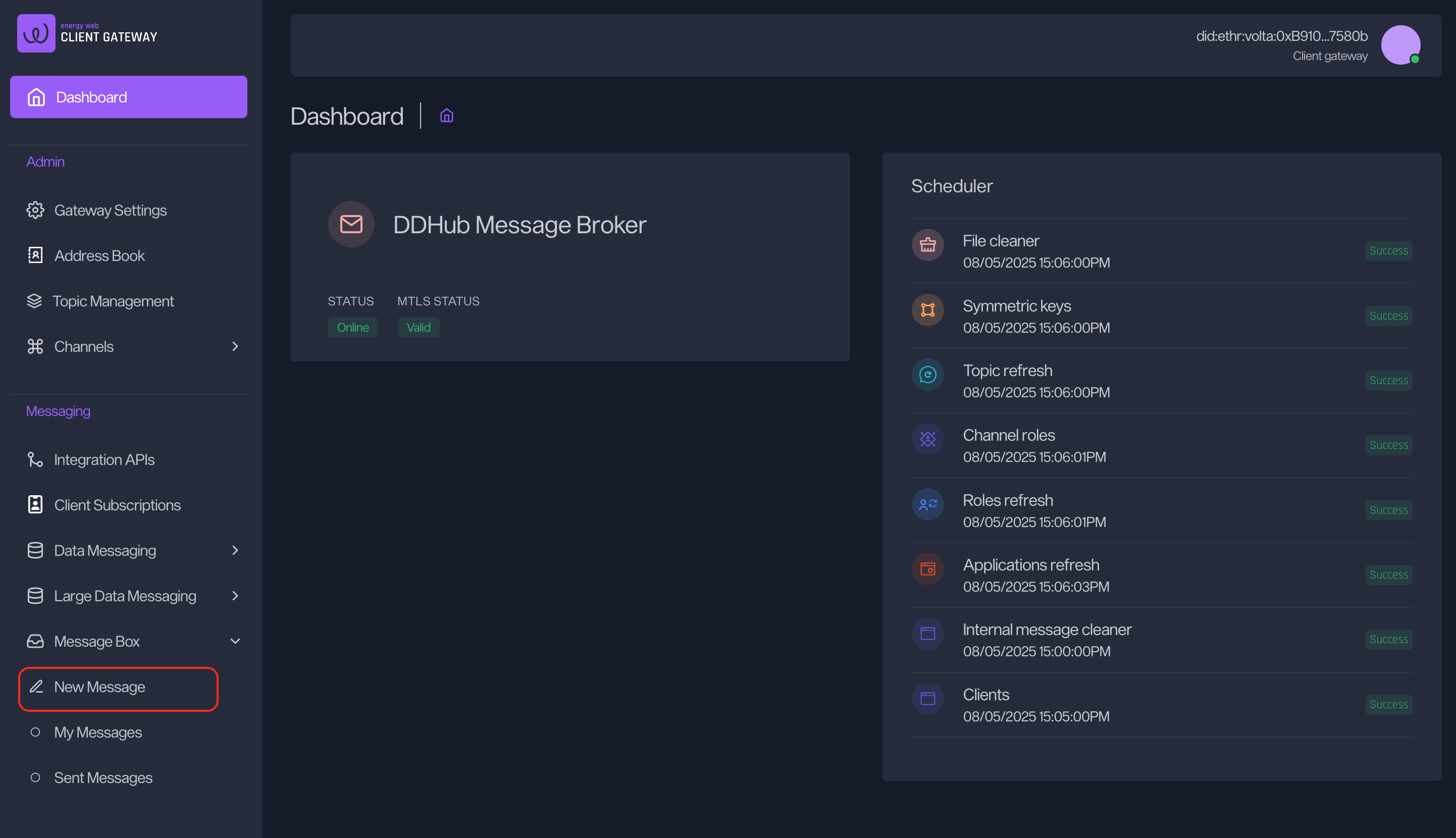
1. Navigate to `Message Box` > `New Message` &#x20;

<figure><img src="/files/7DFLNMQiVlvo8aj1QNs7" alt=""><figcaption><p>Message Box > New Message menu</p></figcaption></figure>

2. Select a channel, topic name and version. Click `Next` to proceed

<figure><img src="/files/kBDApcBKgeBwZzjrJ5We" alt=""><figcaption><p>Select channel and topic</p></figcaption></figure>

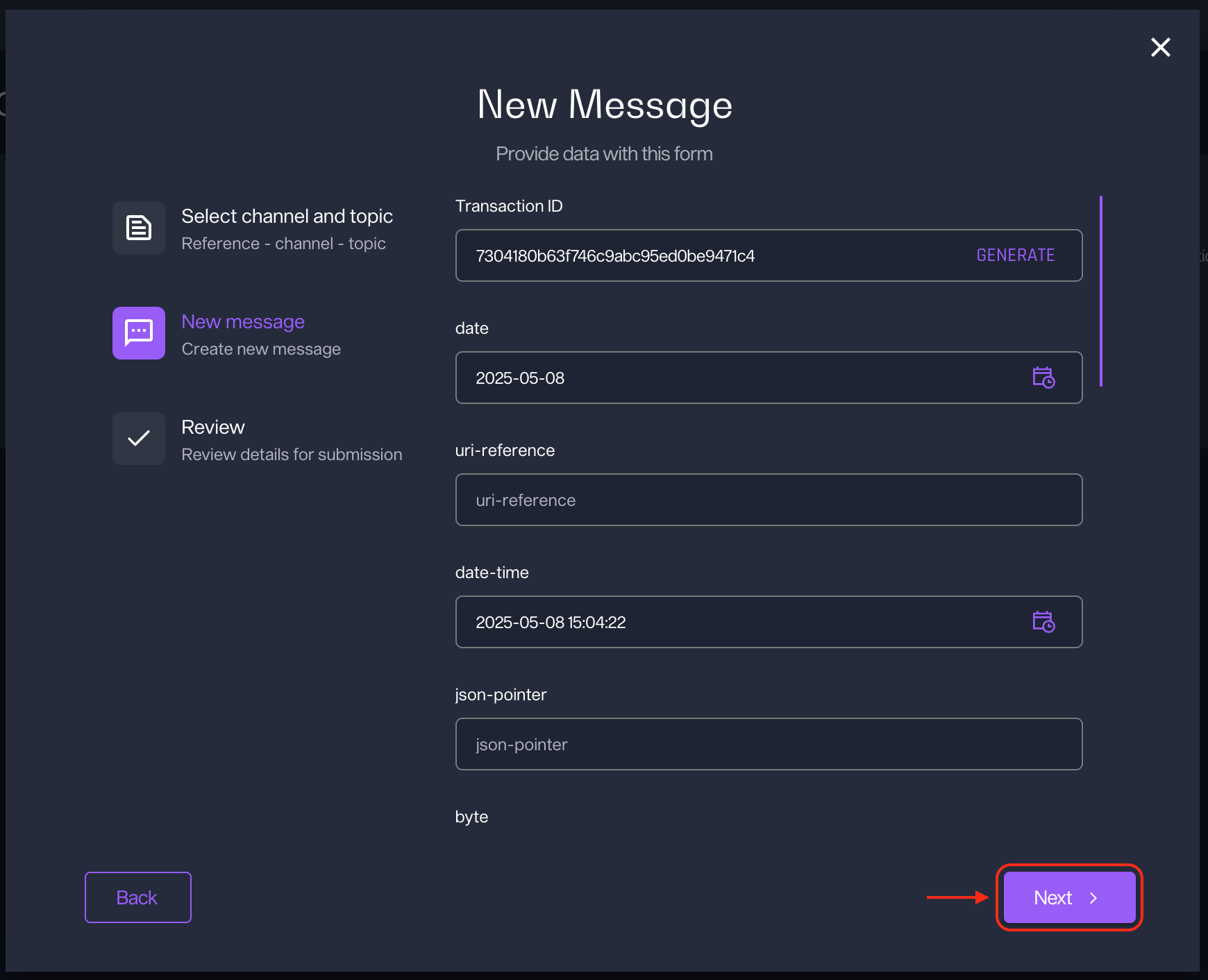
3. Fill the form and click `Next`

<figure><img src="/files/ZMG3RcIeQg23iB5z7nNn" alt=""><figcaption><p>New message form</p></figcaption></figure>

4. Review the JSON generated based on your form input in the previous step. Click `Send Message` to proceed

<figure><img src="/files/lHo1LJP3eSK2CMUkb38J" alt=""><figcaption><p>Review message</p></figcaption></figure>

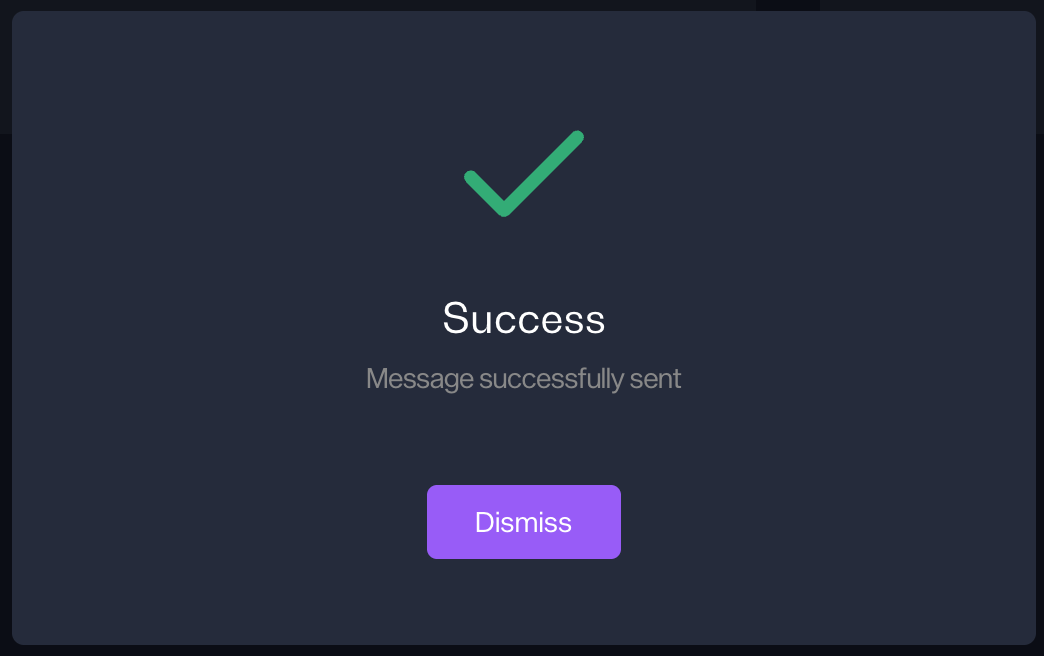
5. Success message will be shown, click `Dismiss` to close modal

<figure><img src="/files/8LyZGuzIAPAwCsbqDqSn" alt="" width="375"><figcaption><p>Successfully sent a message</p></figcaption></figure>

#### Receiving a message

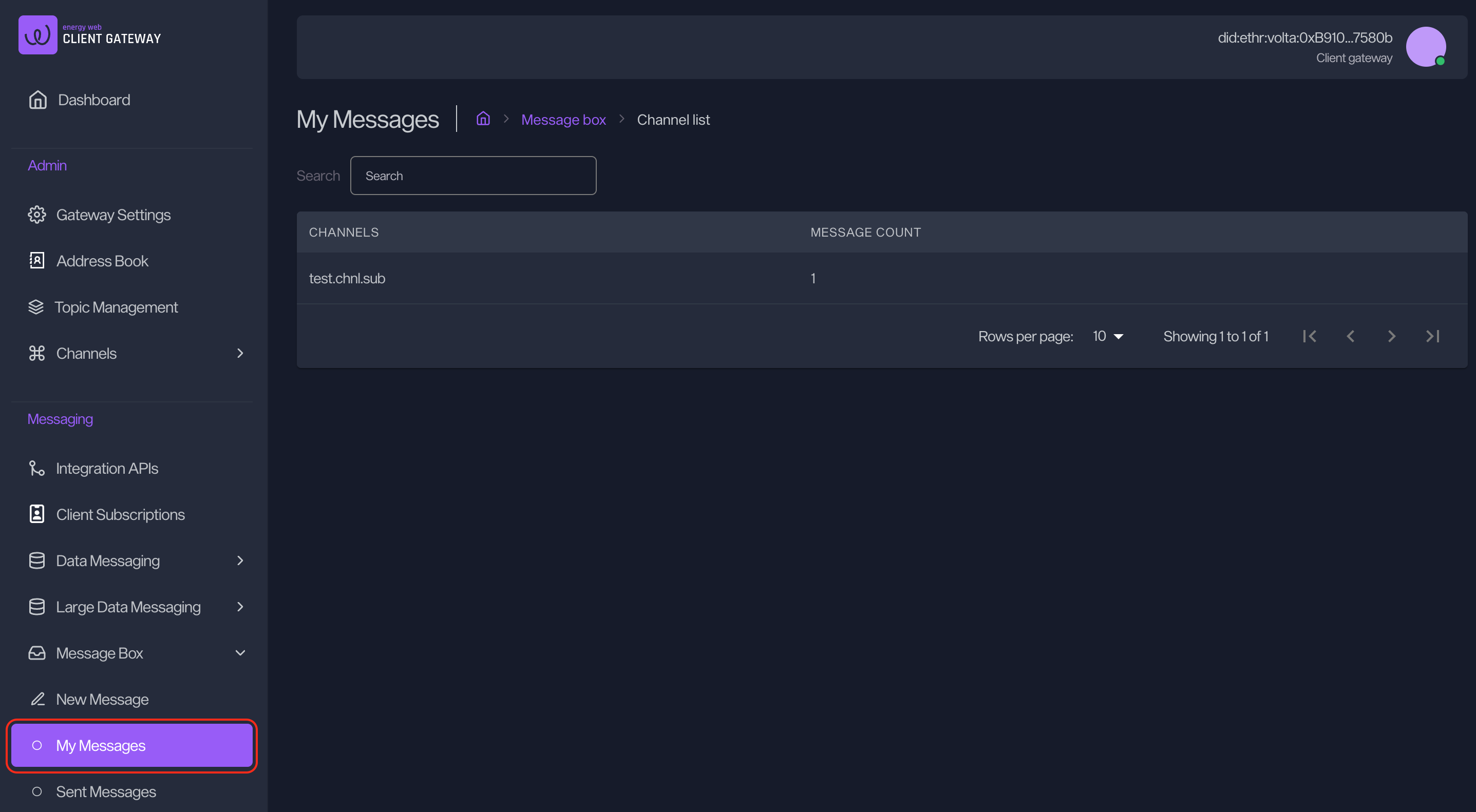
1. Navigate to `Message Box` > `My Messages`  and click on the channel you would like to view message from

<figure><img src="/files/8Hbmkc999PSRmSohWqKW" alt=""><figcaption><p>My messages channel list</p></figcaption></figure>

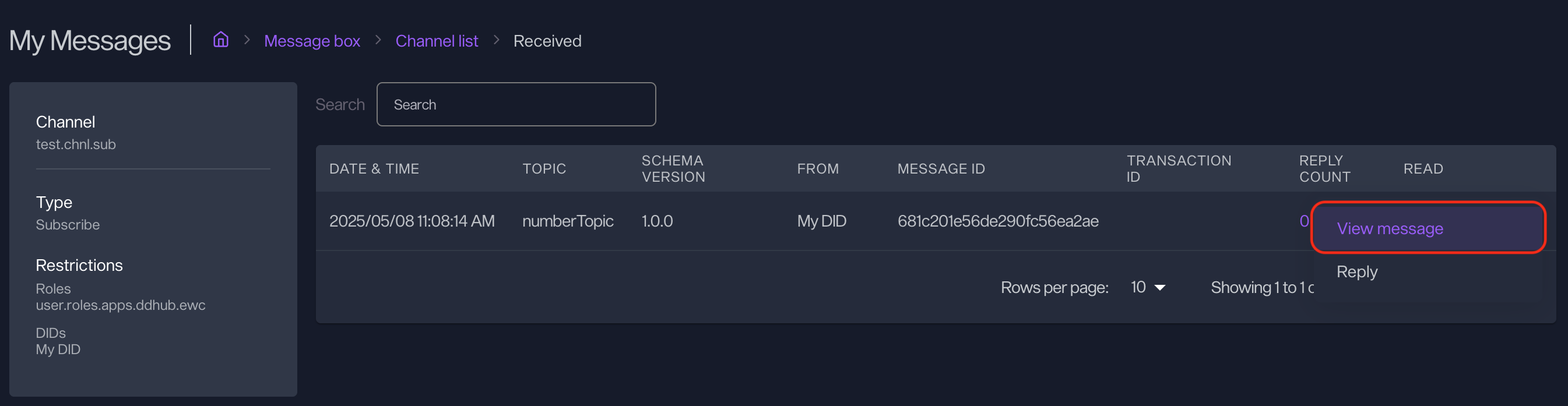
2. Click on `View Message` to see the message content

<figure><img src="/files/4gmjlaHPdJFLJwGn3Aq3" alt=""><figcaption><p>Received messages list</p></figcaption></figure>

3. Entry view will be shown by default, you may also switch to JSON view to see the received message. Refer to the next section for replying a message

<figure><img src="/files/7M8cBLWcUfZY4tFCaz6n" alt=""><figcaption><p>View message</p></figcaption></figure>

#### Replying a message

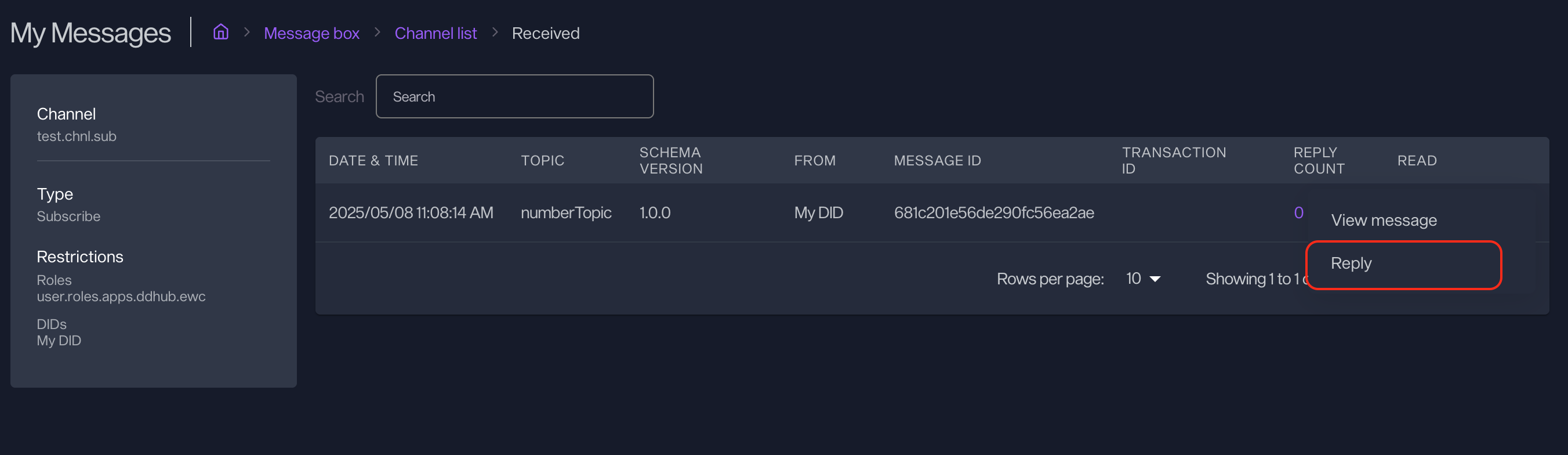
1. Click `Reply`  directly in the view message modal or in the received messages list

<figure><img src="/files/7o4ZXvydxSc6OhvskqIo" alt=""><figcaption><p>Reply message action</p></figcaption></figure>

2. Select a channel, topic name and version before clicking `Next`

<figure><img src="/files/lH3OjJ0htzF0SCFs6gtl" alt=""><figcaption><p>Select channel and topic</p></figcaption></figure>

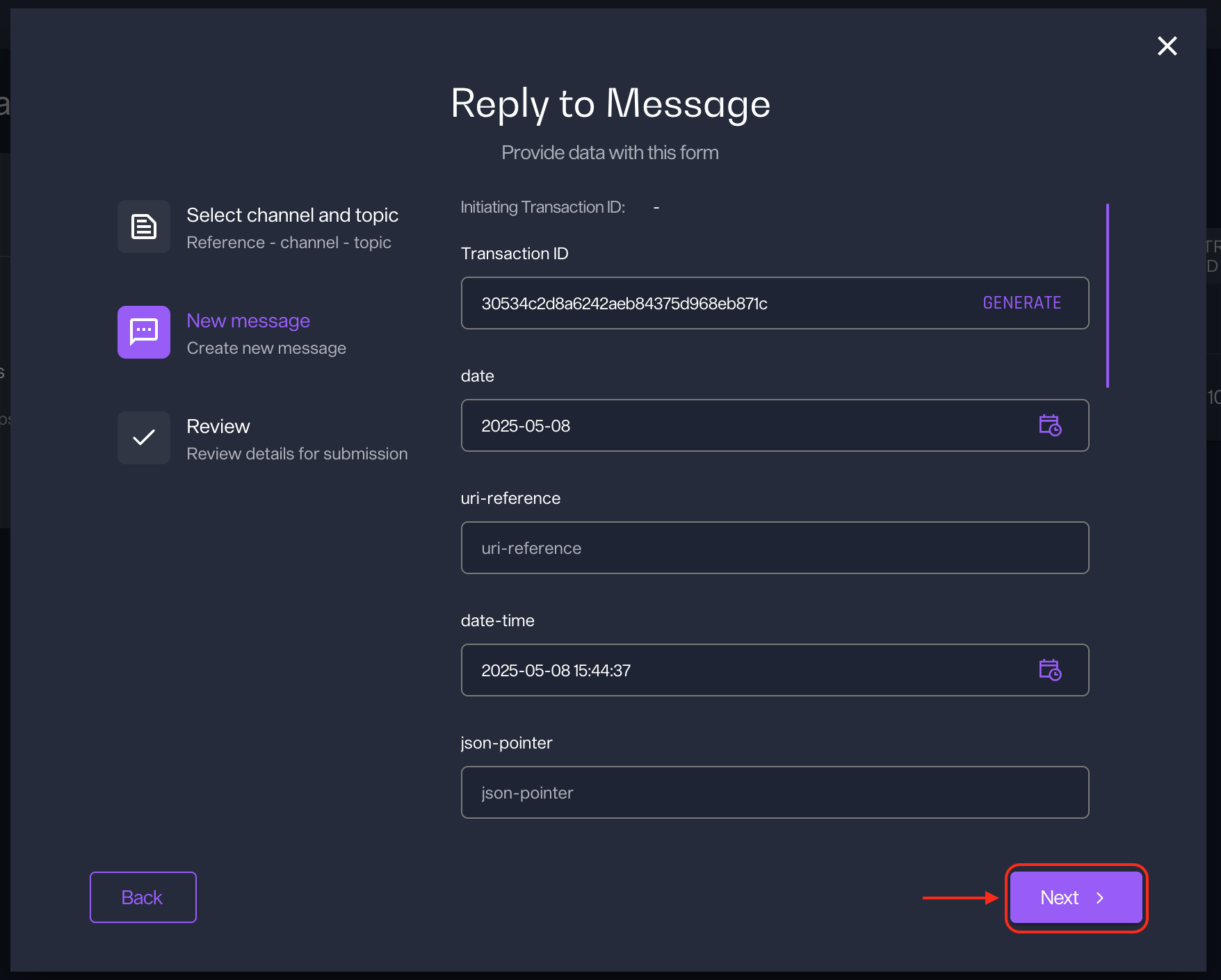
3. Fill in the reply form and click `Next`

<figure><img src="/files/vsM14AMHoXbdoUKOS88N" alt=""><figcaption><p>Reply form</p></figcaption></figure>

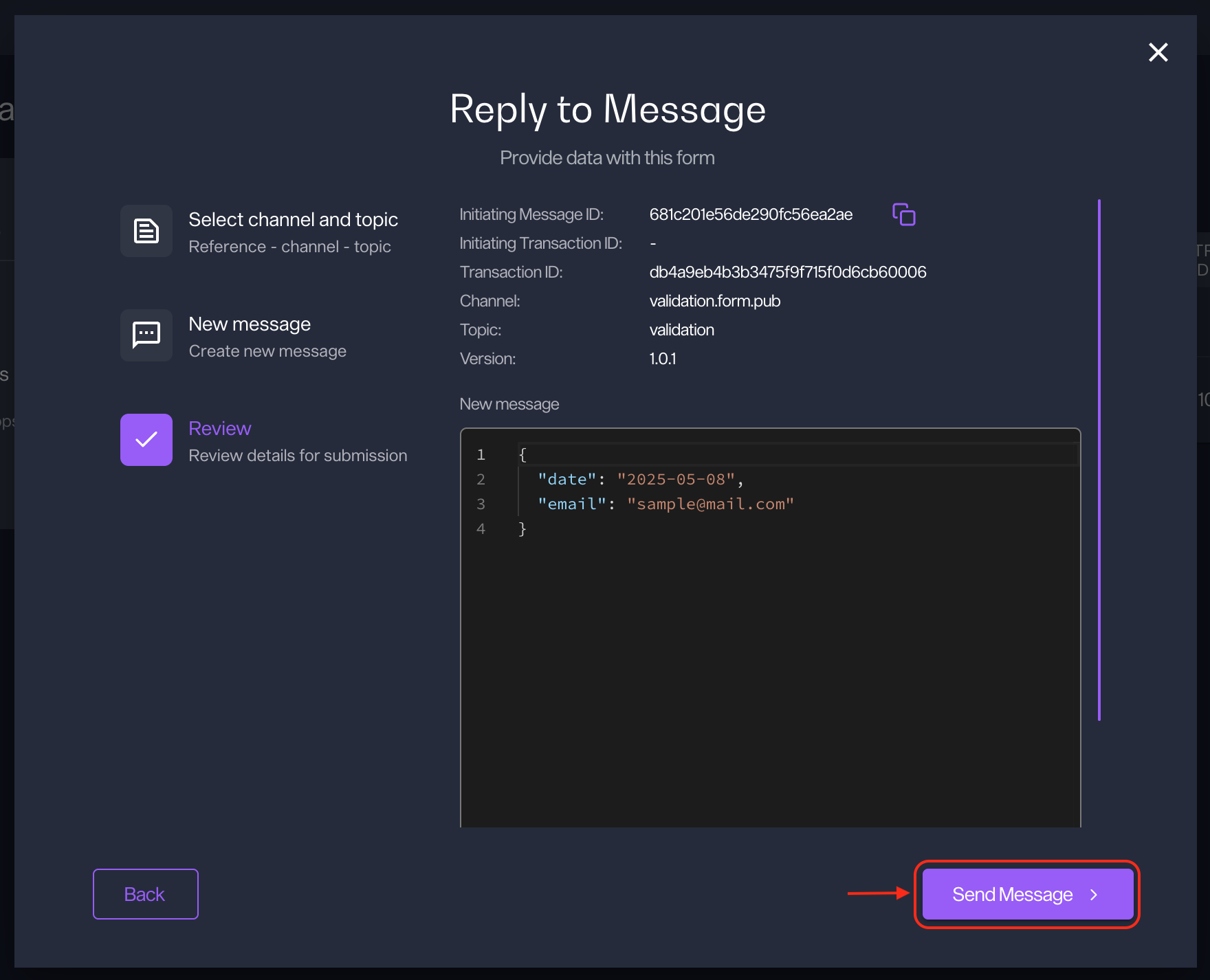
4. Review the JSON generated based on your form input in the previous step. Click `Send Message` to proceed

<figure><img src="/files/wd80hYMSIWZePCUgkmMW" alt=""><figcaption><p>Review message</p></figcaption></figure>

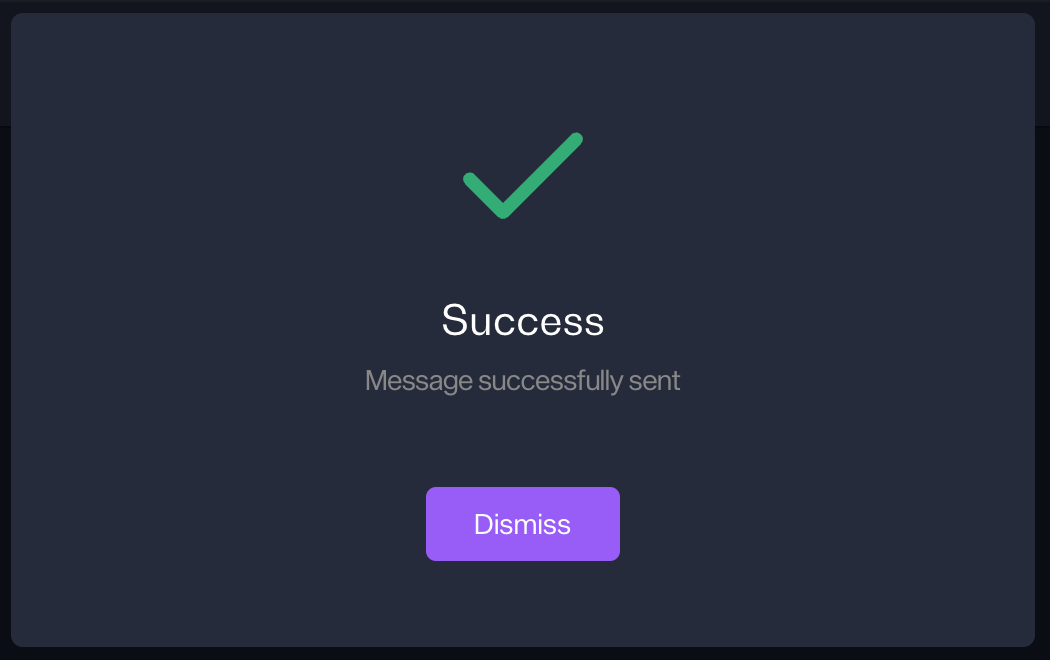
5. Success message will be shown, click `Dismiss` to close modal

<figure><img src="/files/FCfdEiiUUlyBXj1g5x7u" alt="" width="375"><figcaption><p>Successfully sent a message</p></figcaption></figure>

#### Viewing sent messages

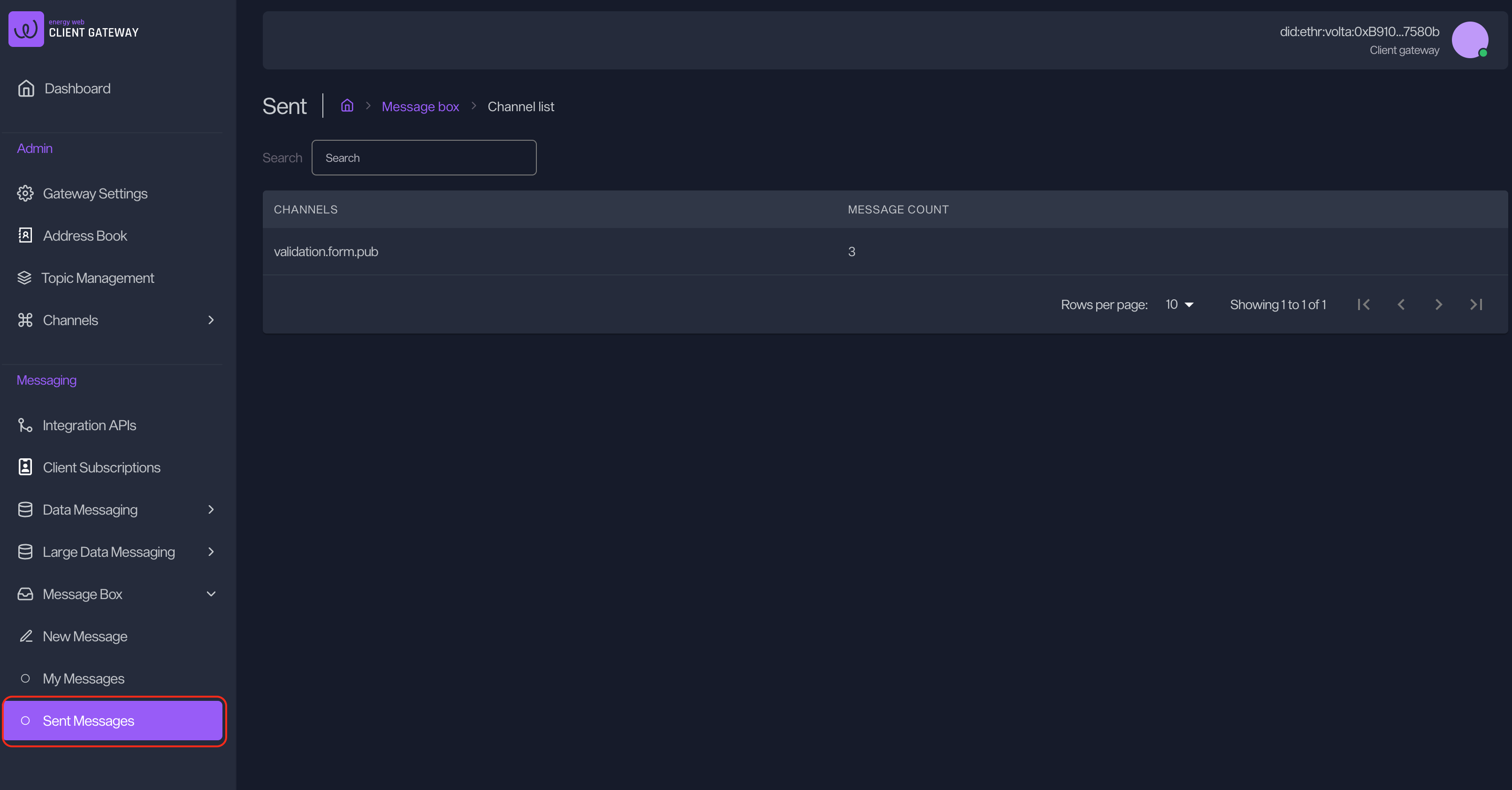
1. Navigate to `Message Box` > `Sent`  and click on the channel you would like to view messages that you have sent to

<figure><img src="/files/FhlQZm8PV8svmKaxwsSc" alt=""><figcaption><p>Sent messages channel list</p></figcaption></figure>

2. Click on `View message`&#x20;

<figure><img src="/files/lBtvJLCkchxH21UdE9LJ" alt=""><figcaption><p>Sent message list</p></figcaption></figure>

3. The message will be displayed. You may also switch between entry or JSON view. Refer to the next section for viewing recipients

<figure><img src="/files/lOm04CwCIU3DdhbmUhXt" alt=""><figcaption><p>View Message</p></figcaption></figure>

#### Viewing sent messages recipients

1. Click on `View recipients` in the sent messages page

<figure><img src="/files/yf6mSxlfIww9IMp8hEOO" alt=""><figcaption><p>View recipients action</p></figcaption></figure>

2. The recipient list will be displayed. Click `x` to close modal

<figure><img src="/files/bpFlsu0facoX8WQcodgs" alt=""><figcaption><p>Message recipient list</p></figcaption></figure>


---

# Agent Instructions: Querying This Documentation

If you need additional information that is not directly available in this page, you can query the documentation dynamically by asking a question.

Perform an HTTP GET request on the current page URL with the `ask` query parameter:

```
GET https://docs-launchpad.energyweb.org/energy-solutions/digital-spine-by-energy-web/component-guides/ddhub-client-gateway/technical-guide/messaging.md?ask=<question>
```

The question should be specific, self-contained, and written in natural language.
The response will contain a direct answer to the question and relevant excerpts and sources from the documentation.

Use this mechanism when the answer is not explicitly present in the current page, you need clarification or additional context, or you want to retrieve related documentation sections.